

Plant Diversity Co.
Dryland Cover
The Low Cost Blend for Dry Ground
The Dryland Cover is made up of mostly cool season plants, giving it natural frost tolerance. Cool season cereals, forage peas, and broadleaves like sunflower and purple top turnip make it a fit for drier ground, and Winter Triticale gives you regrowth to graze.
It won't reach the top end of our other blends at the same moisture, but it still produces well, for less money, where rain is short.
The Dryland Cover
plant Species in blend
Mostly cool season plants with forage peas, sunflower & purple top turnip for drier ground. Seed early, into moisture, rather than seeding deeper.
Seeding Rate: 60 lbs/acre
SKU: 2,000 lb Tote
Seeding Time: April 15th - May 15th
Inoculant: Pea inoculant required
Use On The Farm: Silage, Dry Hay, Grazing
FCC Financing is available for 2026-2027 seed purchases.
The Dryland Cover
FREQUENTLY ASKED QUESTIONS
See below for the most frequently asked questions regarding the Dryland Cover
Dryland Cover
Why Plant Diversity?
Monoculture Environment: plants are all competing for the same sunlight, moisture & nutrients - all at the exact same time. This is competition.
Multi-Species Environment: Plants are forming symbiotic relationships with rhizobium bacteria, mycorrhizal fungi, and other soil micro-organisms to fix, solubilize & share nutrients (and water). This is collaboration.
Depending on soil temperature, soil chemistry, and environmental conditions present, a different spectrum of plant species in the canopy is always expressed.
This is why plant diversity is an insurance policy with Mother Nature.
Dryland Cover
Seeding Best Practices
STEP 1: If weed pressure is an issue or you have a history of problem weeds on the field you selected, we recommend a pre-burn herbicide application. Do not plant on fields with kochia problems.
STEP 2: If applying Nitrogen, keep below 40 lbs/actual. A pea inoculant is required. Excess nitrogen fertilizer will inhibit legumes in establishing a relationship with rhizobium bacteria.
STEP 3: Do not broadcast. Target 3 ⁄4 of an inch or up to 1 inch if moisture is available. The larger seeds will “give way” to the smaller seeds in the blend. Do not bury the blend 2-3 inches into the ground.
STEP 4: With mostly cool-season plant species in the blend, frost risk is low. This is the trade-off. This blend allows you to seed early to maximize biomass & regrowth potential.
Dryland Cover
Graze The Regrowth
Plant species in the Dryland Cover have been selected to maximize regrowth potential for late fall grazing, with Winter Triticale making up most of the regrowth.
Dryland Cover
Plant Species In The blend
All cool-season cereals in this blend are sourced to guarantee CERTIFIED NO. 1 quality control & standards
All other seeds sourced and cleaned in the Dryland Cover meet the minimum standard of COMMON NO. 1
Weed Seed %: Cleaned to Canada Certified No. 1 standard
Germination % Minimum: Canada Certified No. 1 standard
Dryland Cover
Farmer Testimonials
To find testimonials from farmers across Western Canada who have implemented the Dryland Cover into their operations, click here.
You can find further farmer testimonials on social media via Facebook, Twitter & Instagram.
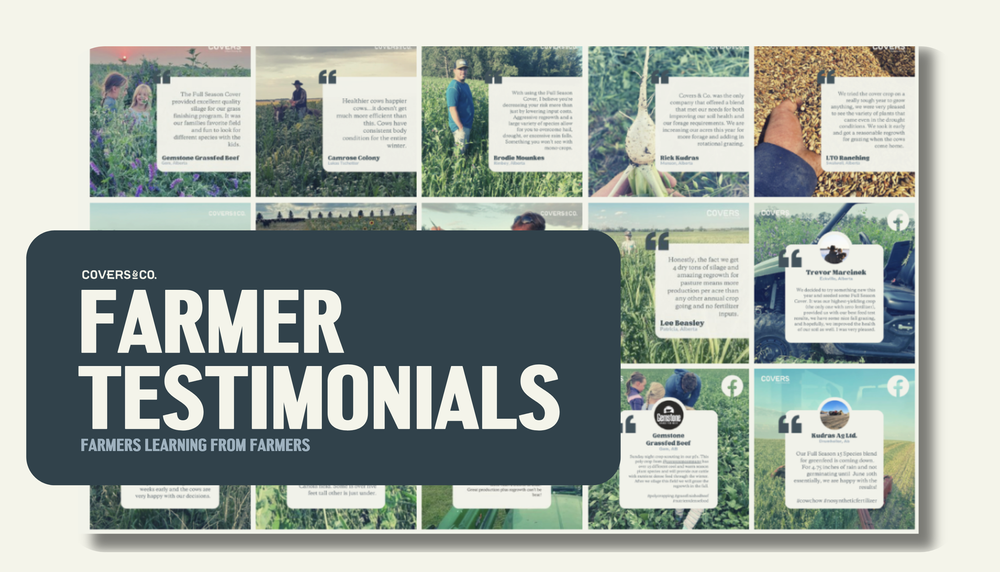
Click on image to view Farmer Testimonials.
Dryland Cover
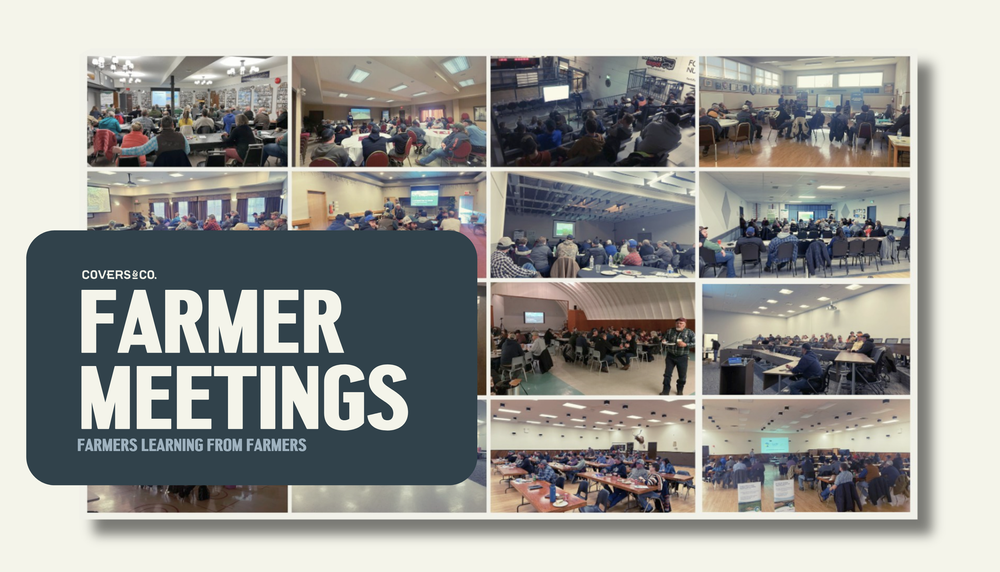
Local Farmer Meetings
If you’re looking for further education on the concept of multi-species cover crops for winter forage - consider attending one of our upcoming Local Farmer Meetings.
An excellent opportunity to network with like-minded farmers.
Remember to ApPly
OFCAF FUnding
Remember to apply for the OFCAF funding, where you may be eligible to recieve $50.00/acre (max. $75,000) for adopting multispecies cover crops on your operation. Click here for help getting the process/application started.
Funding will differ across Manitoba, Saskatchewan, & Alberta.


Interested in Learning More?
We are farmers ourselves
Feel free to contact your Provincial Territory Manager if you have any further questions regarding the Dryland Cover
-
If applying Nitrogen fertilizer, keep below 40 lbs/acre actual.
If applying Phosphorus fertlizer, keep below 10 lbs/acre actual (in seed row)
A pea inoculant (Rhizobium leguminosarum) is required.
Important To Note: Excess nitrogen fertilizer will inhibit legumes from establishing a relationship with rhizobium bacteria. This relationship needs to be established for later season vegetation and growth.
-
If weed pressure is an issue or you have a history of problem weeds on the field you selected, we recommend a pre-burn herbicide application. Do not plant on fields with kochia problems. For best weed control, spray crop with glyphosate 2-3 days after seeding. (pre-emergence)
The herbicides AIM (Group 14) or Conquer (Group 14 & 6) from FMC are a recommended glyphosate tank mix partner for better control of broadleaf weeds.
-
With mostly cool-season plant species in the blend, we have limited frost risk, whereas for any blend with warm-season plant species we need to wait until soil temperatures warm up.
This is the trade-off. Seeding early into moisture matters more than seeding deeper on dry ground.
Seeding depth of 3/4 inch - 1 inch.
-
The Dryland Cover will reach full biomass potential about 70-80 days after germination (depending on seed timing). Due to plant diversity and indeterminate species, the window for silage is much wider than a monocrop forage.
Cut Early: Less biomass, more regrowth, higher protein.
Cut Later: More biomass, less regrowth, lower protein.
-
Yes. Winter Triticale & Purple Top Turnip will regrow. These plant species were selected to provide a balance of energy (cereals) & protein (legumes). Moisture will determine regrowth.
If you want more re-growth, cut early. If you want more winter forage with less grazing, cut later.
-
Expect a balanced feed ration of energy & protein due to high energy cereals & high protein legumes.
Range depends on harvest timing.
Protein: 11.0-16.0
TDN: 60-65
-
Yes. You can expect 7-10 days dry down time. Feed quality & palatability will be slightly lower than silage.
-
Yes. Decaying high-diversity root biomass will improve soil function greatly. (Increased water infiltration, soil aggregation & biological activity)
Remember to benchmark this by following our Water Infiltration Protocol.
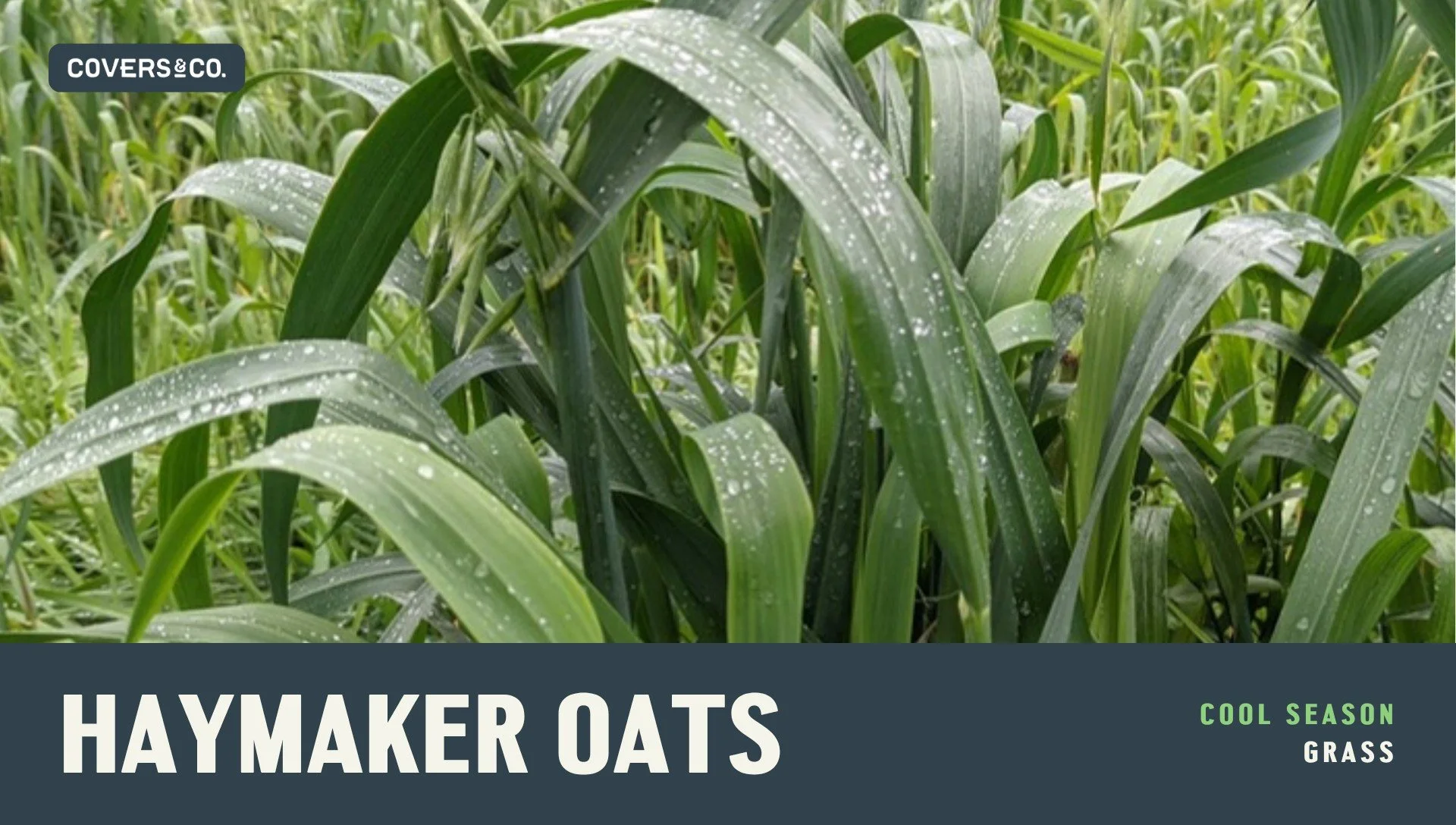
Haymaker Oats (28%)
Plant Type: Cool Season Grass
Seed Quality: Certified #1 Standard
Variety: Haymaker
Why In The Blend? Haymaker Oats are a great nutrient scavenger due to their dense fibrous root system. One of the most mycorrhizal-dependent cereals. Large leaf surface gives forage oats the upper hand over regular oats when maximizing sunlight capture. (Photosynthesis)
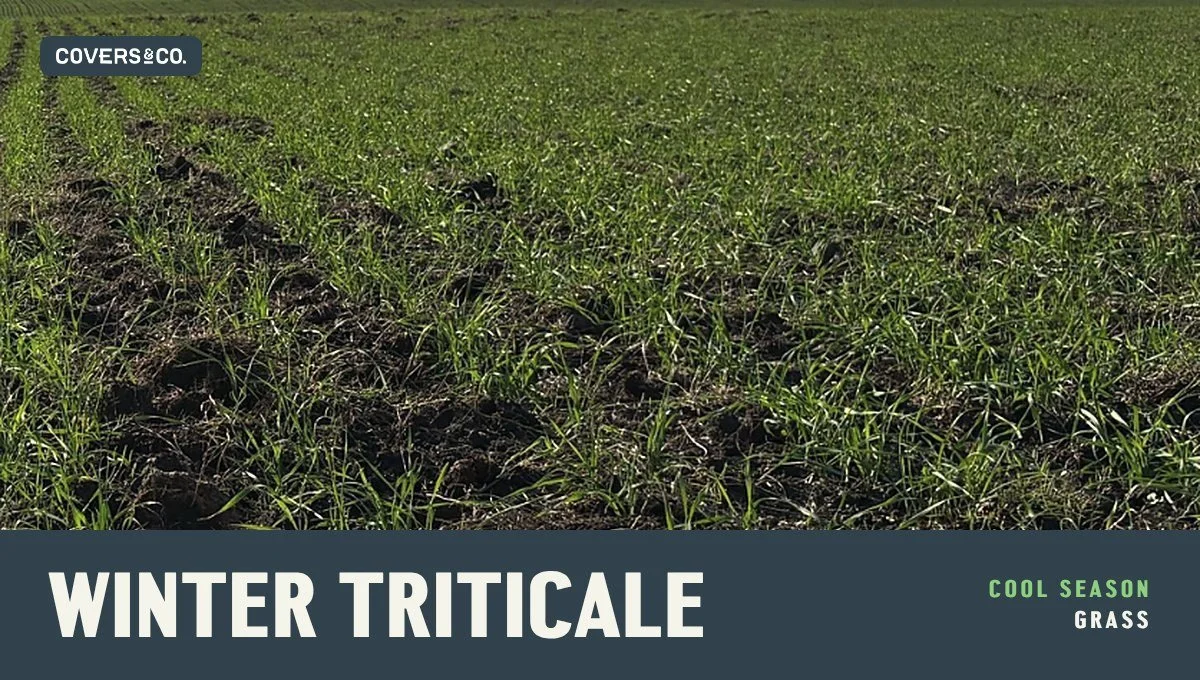
Winter Triticale (13%)
Plant Type: Cool Season Grass
Seed Quality: Common #1 Standard
Variety: Bobcat
Why In The Blend: Good overwinter cover crop option, especially if taking for silage/grazing. Highest palatability of winter annual grass species.
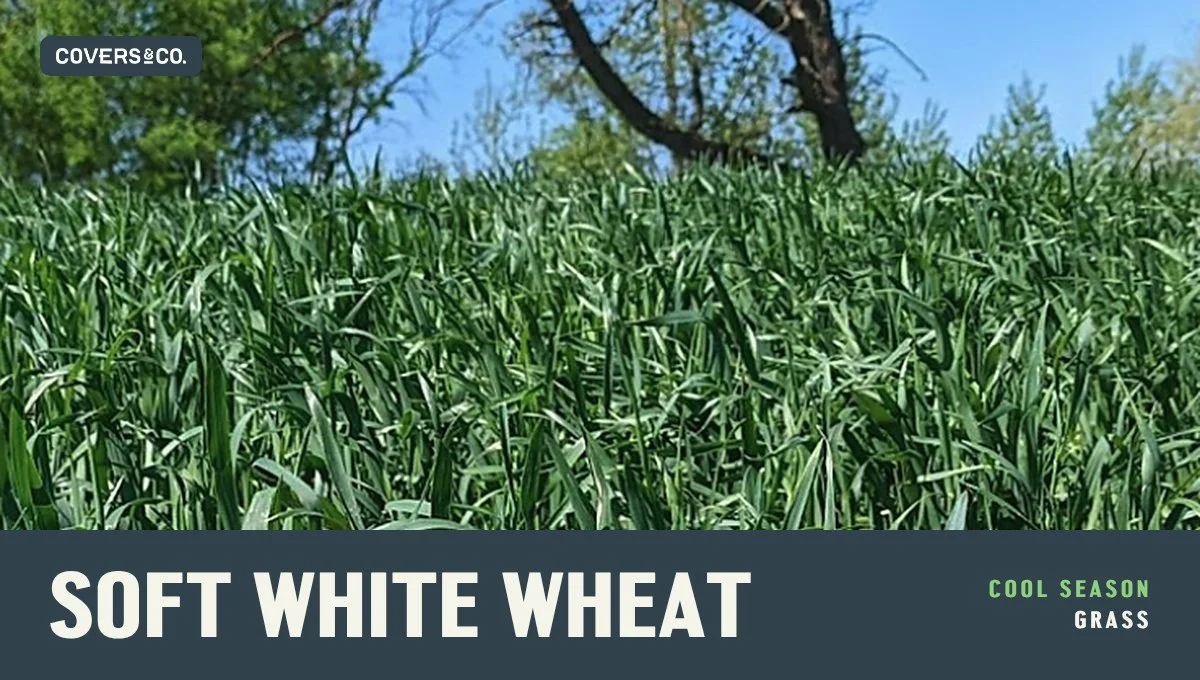
Sadash Soft White Wheat (11%)
Plant Type: Cool Season Grass
Seed Quality: Certified #1 Standard
Variety: Sadash
Why In The Blend? This is a popular soft white spring wheat variety in Canada known for its high yields and quality. It has short, strong straw and excellent standability.
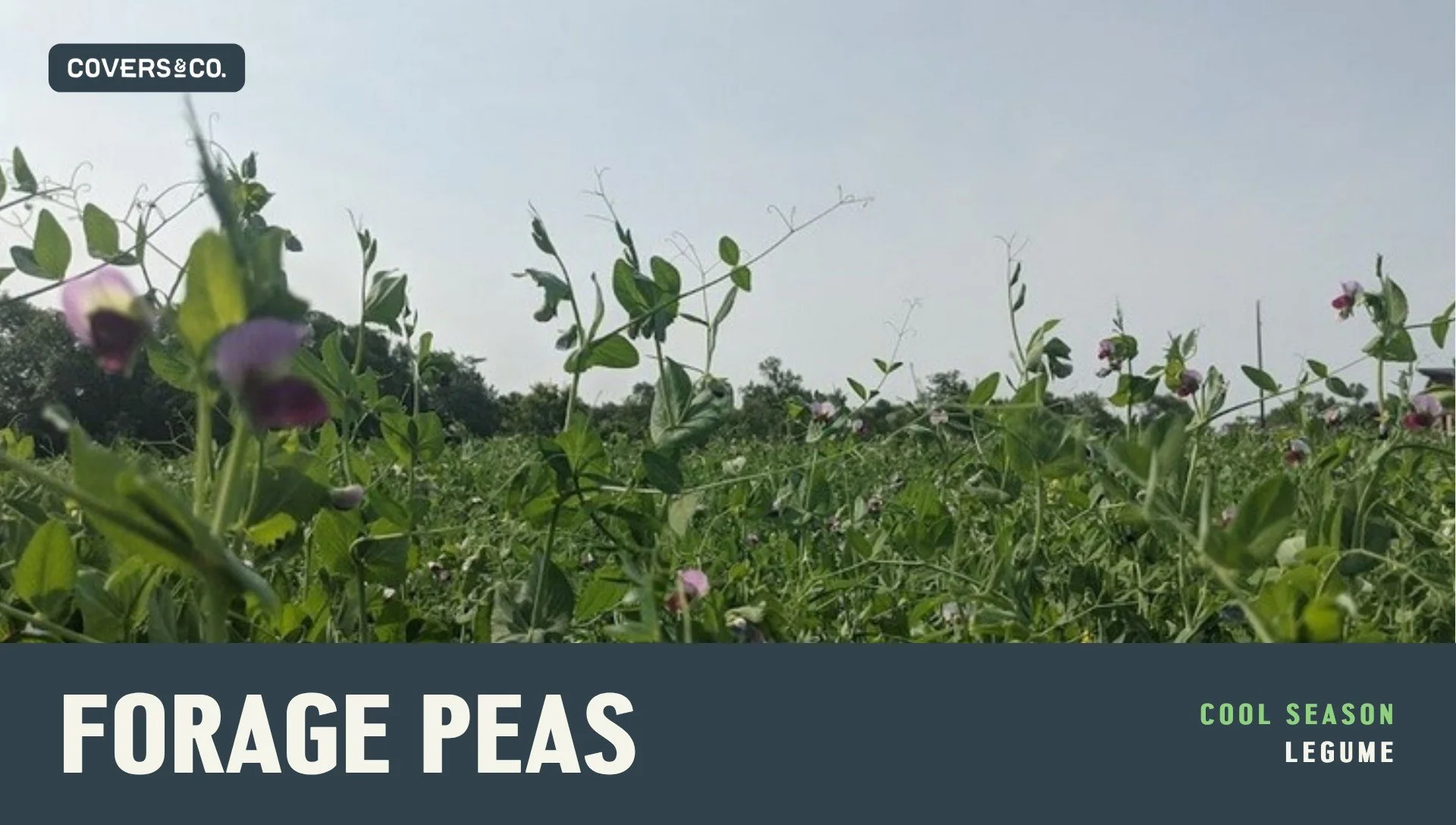
Forage Peas (43%)
Plant Type: Cool Season Legume
Seed Quality: Common #1 Standard
Variety: 40-10
Why In The Blend? Forage pea varieties focus on smaller seed & increased biomass rather than grain yield. Rapid spring growth. The “leaky root” characteristic allows this plant to share nitrogen with other plant species.
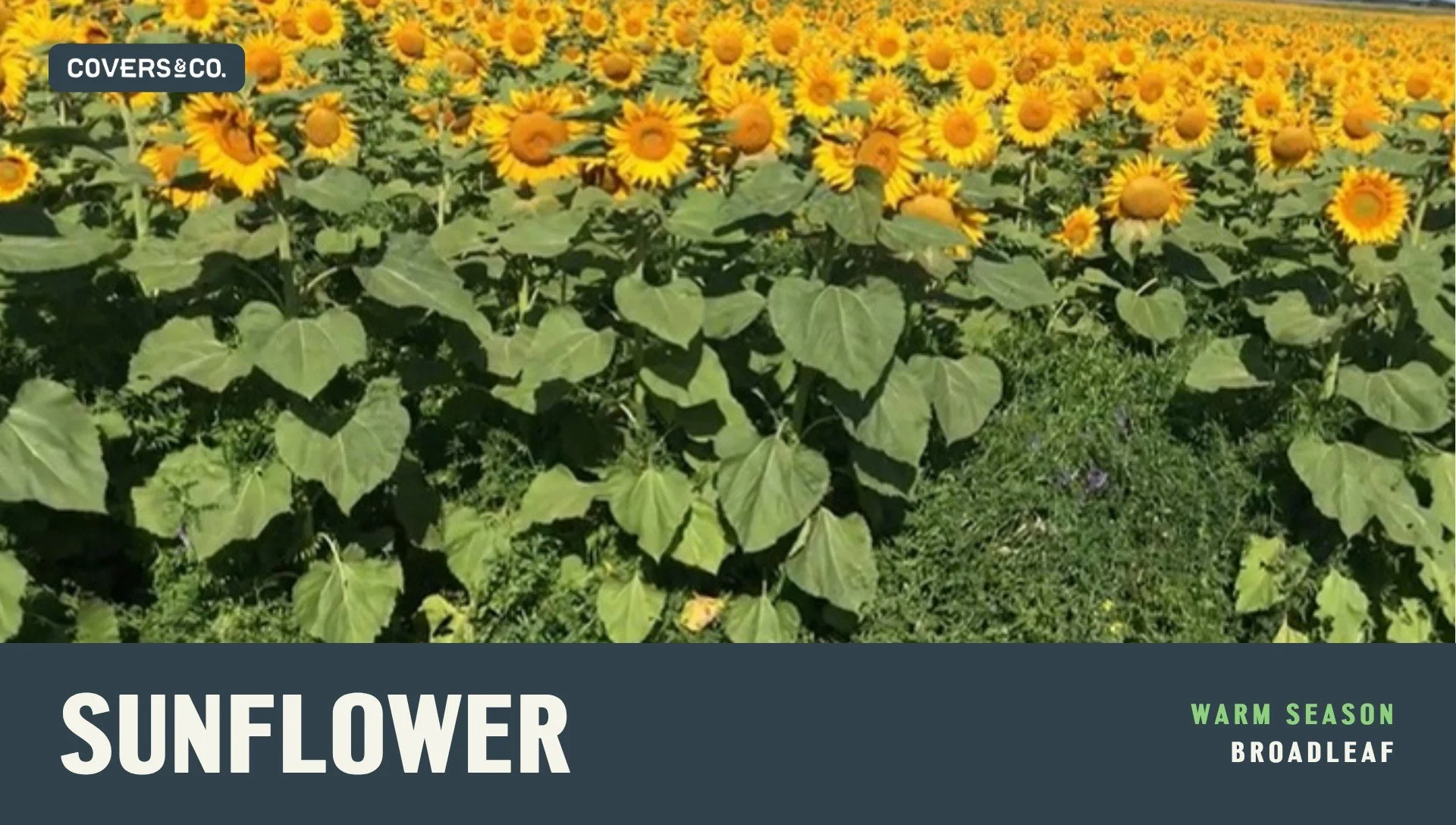
Sunflower Black Oil (2%)
Plant Type: Warm Season Broadleaf
Seed Quality: Common #1 Standard
Why In The Blend? Sunflowers are a palatable feed when taken early with good drought tolerance. Deep rooting characteristics allow this plant to access minerals deep in the soil profile (specifically, Zinc). C3 plant with C4 growth characteristics. Early maturing.
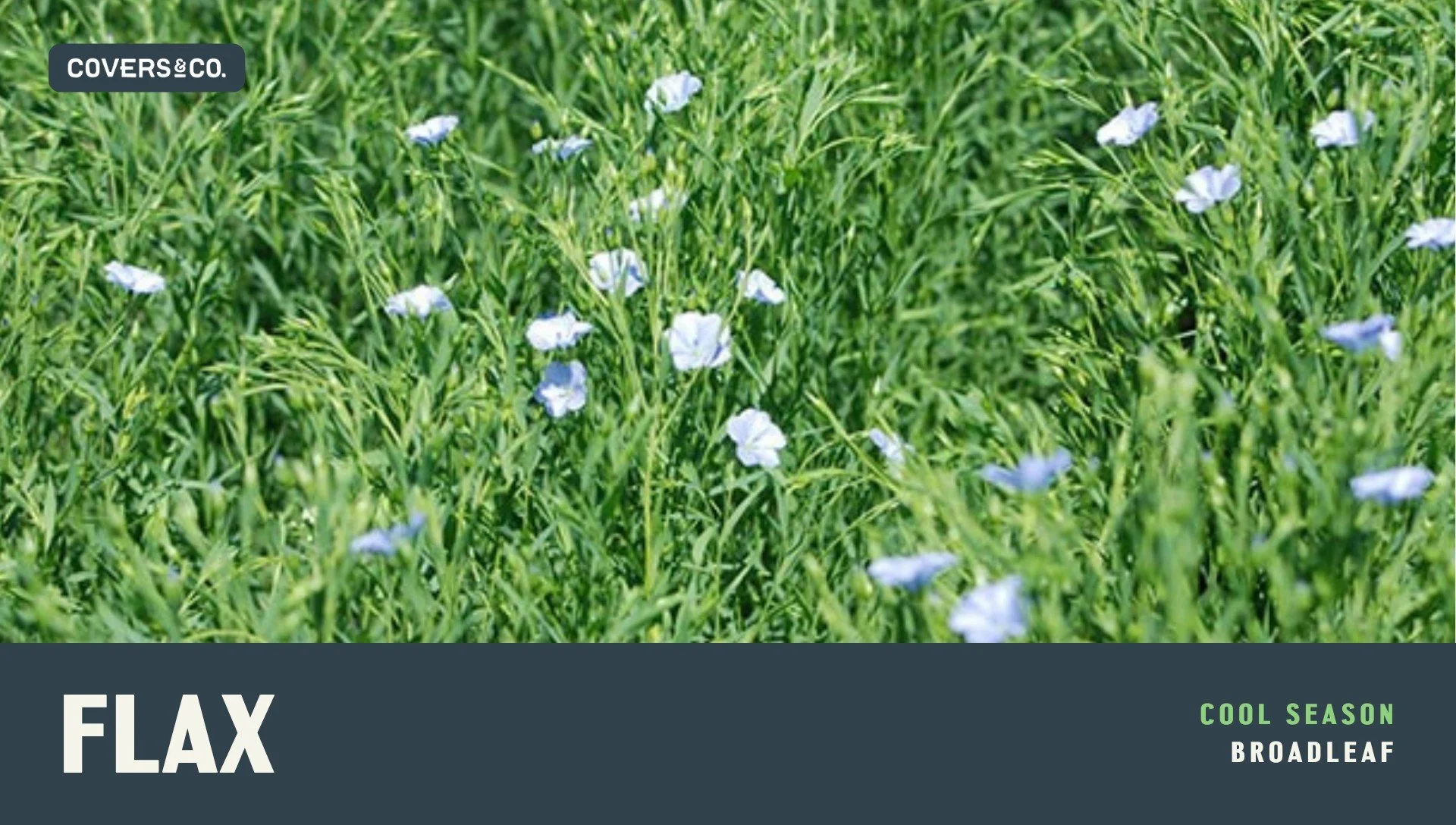
Flax (2%)
Plant Type: Cool Season Broadleaf (Linum)
Seed Quality: Common #1 Standard
Why In The Blend? Flax is the highest mycorrhizal fungi-dependent plant. Having a small percentage in the blend helps promote the Arbuscular Mycorrhizal Fungi network. (The network that allows all plant species in the blend to share minerals & water)
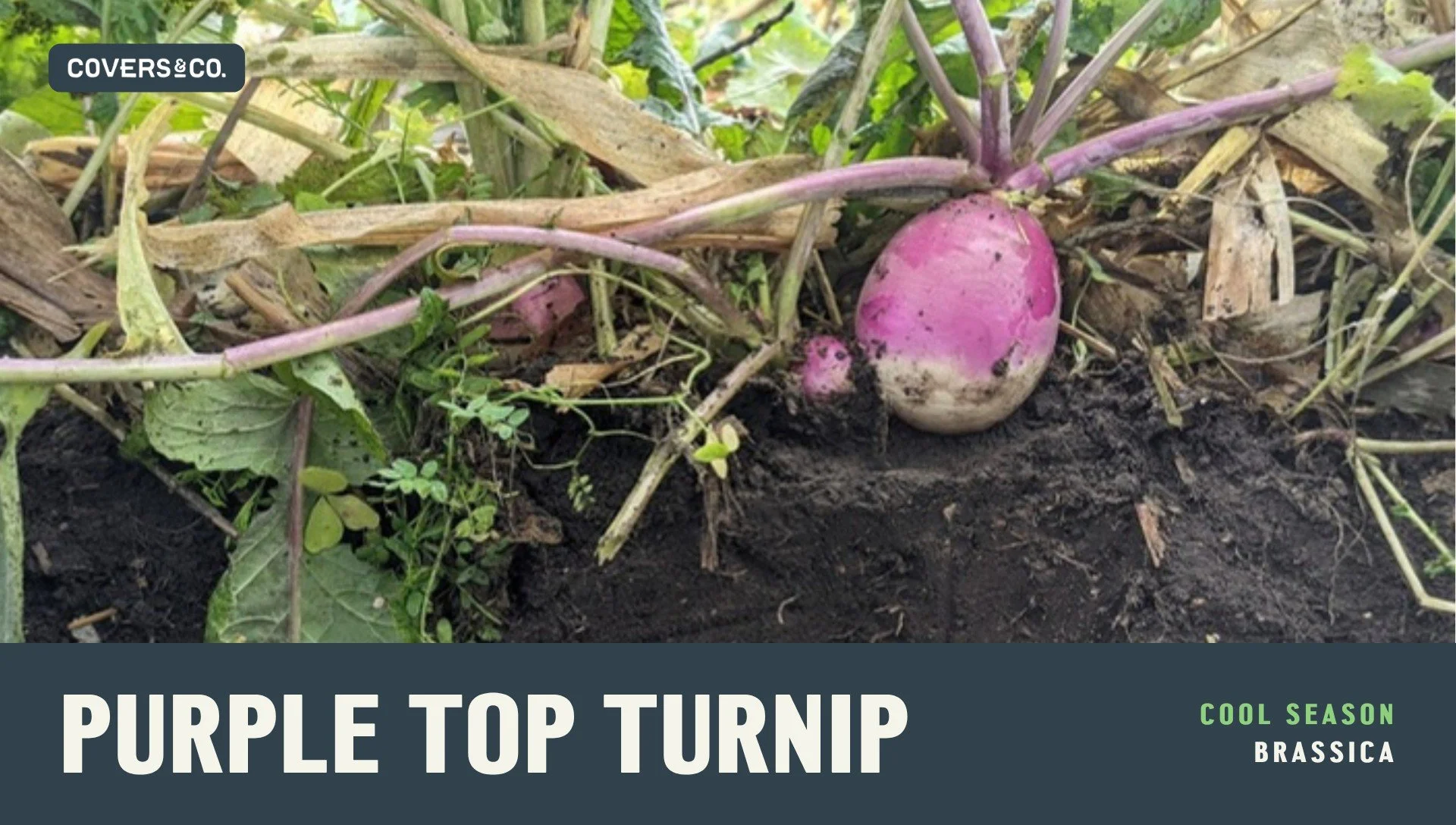
Purple Top Turnip (1%)
Plant Type: Cool Season Broadleaf (Brassica)
Seed Quality: Common #1 Standard
Comments: Highly nutritious brassica (digestibility & protein). Tuber scavenges nitrogen and other nutrients for slow release decomposition the following year.