

Plant Diversity Co.
Complete Hay Cover
A Hay Stand and a Crop in One Pass
The Complete Hay Cover is a new perennial hay stand and an annual nurse crop, seeded together. The cereals, peas and broadleaves give you a cut of high quality greenfeed in year one, while our Light Land Hay Cover establishes underneath for years of hay to come.
One seeding pass, no lost year of production.
The Complete Hay Cover
plant Species in blend
75% annual nurse crop (SO-1 Super Oats, Haymaker Oats, Forage Barley, Forage Peas, Flax, Purple Top Turnip) + 25% Light Land Hay Cover. Cut the nurse crop early so the young perennials get light and moisture.
Seeding Rate: 60 lbs/acre
SKU: 2,000 lb Tote
Seeding Time: April 15th - May 15th
Inoculant: N-DURE (perennials preinoculated) Learn More
Use On The Farm: Silage, Dry Hay, Grazing
FCC Financing is available for 2026-2027 seed purchases.
The Complete Hay Cover
FREQUENTLY ASKED QUESTIONS
See below for the most frequently asked questions regarding the Complete Hay Cover
Complete Hay Cover
Why Plant Diversity?
Monoculture Environment: plants are all competing for the same sunlight, moisture & nutrients - all at the exact same time. This is competition.
Multi-Species Environment: Plants are forming symbiotic relationships with rhizobium bacteria, mycorrhizal fungi, and other soil micro-organisms to fix, solubilize & share nutrients (and water). This is collaboration.
Depending on soil temperature, soil chemistry, and environmental conditions present, a different spectrum of plant species in the canopy is always expressed.
This is why plant diversity is an insurance policy with Mother Nature.
Complete Hay Cover
Seeding Best Practices
STEP 1: If weed pressure is an issue or you have a history of problem weeds on the field you selected, we recommend a pre-burn herbicide application. Do not plant on fields with kochia problems.
STEP 2: If applying Nitrogen, keep below 40 lbs/actual. A multi-species rhizobium inoculant is required. Excess nitrogen fertilizer will inhibit legumes in establishing a relationship with rhizobium bacteria.
STEP 3: Do not broadcast. Target 1/2 to 3/4 of an inch if moisture is available. The larger seeds will “give way” to the smaller seeds in the blend. Do not bury the blend 2-3 inches into the ground.
STEP 4: Due to only cool-season plant species in the blend, we do not need to worry about frost. This is the trade-off. Less drought tolerance but this blend allows you to seed early to maximize biomass & regrowth potential.
Complete Hay Cover
Graze The Regrowth
Plant species in the Complete Hay Cover have been selected to maximize regrowth potential for late fall grazing.
Complete Hay Cover
Plant Species In The blend
All cool-season cereals in this blend are sourced to guarantee CERTIFIED NO. 1 quality control & standards
All other seeds sourced and cleaned in the Complete Hay Cover meet the minimum standard of COMMON NO. 1
Weed Seed %: Cleaned to Canada Certified No. 1 standard
Germination % Minimum: Canada Certified No. 1 standard
Complete Hay Cover
Farmer Testimonials
To find testimonials from farmers across Western Canada who have implemented the Complete Hay Cover into their operations, click here.
You can find further farmer testimonials on social media via Facebook, Twitter & Instagram.
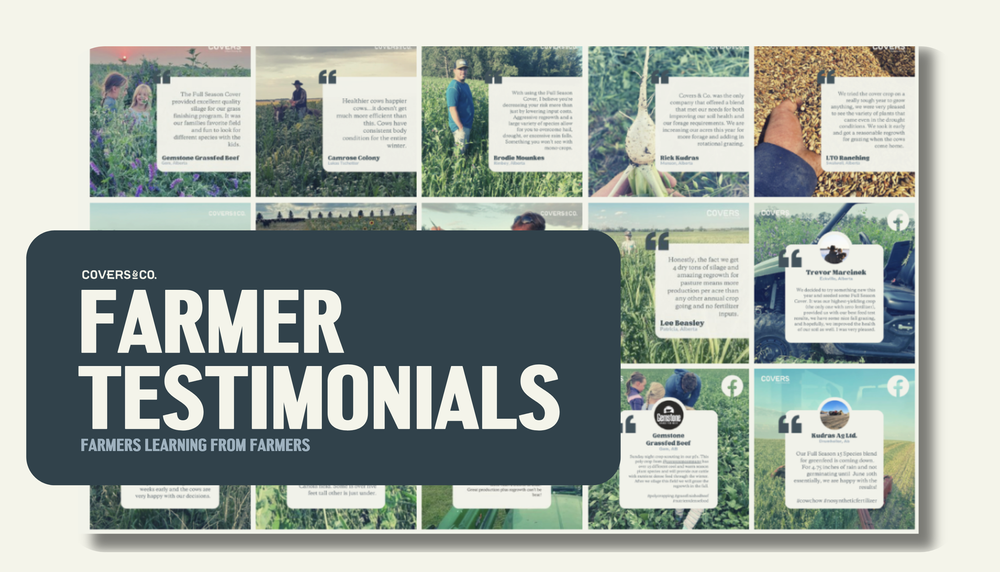
Click on image to view Farmer Testimonials.
Complete Hay Cover
Local Farmer Meetings
If you’re looking for further education on the concept of multi-species cover crops for winter forage - consider attending one of our upcoming Local Farmer Meetings.
An excellent opportunity to network with like-minded farmers.
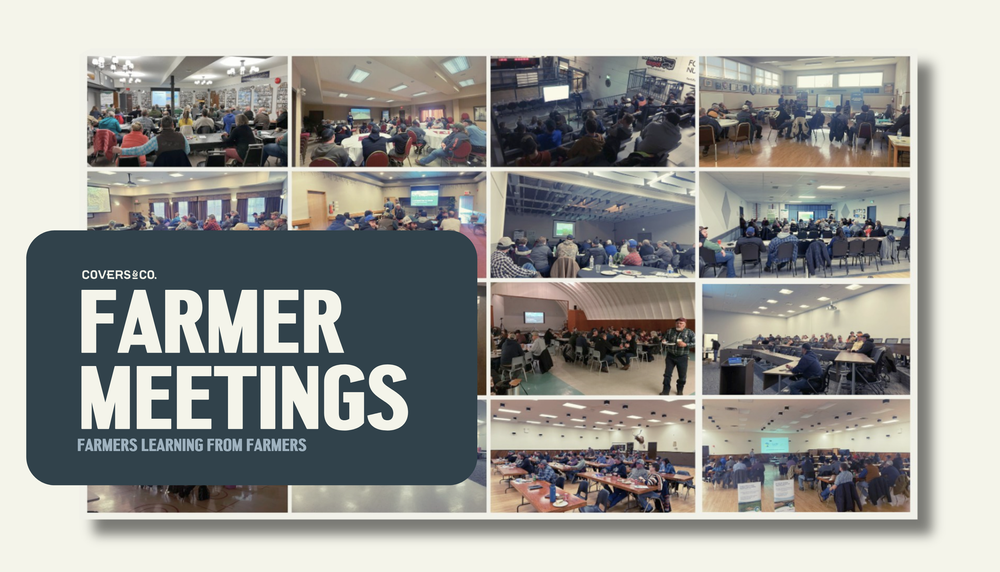
Remember to ApPly
OFCAF FUnding
Remember to apply for the OFCAF funding, where you may be eligible to recieve $50.00/acre (max. $75,000) for adopting multispecies cover crops on your operation. Click here for help getting the process/application started.
Funding will differ across Manitoba, Saskatchewan, & Alberta.


Interested in Learning More?
We are farmers ourselves
Feel free to contact your Provincial Territory Manager if you have any further questions regarding the Complete Hay Cover
-
If applying Nitrogen fertilizer, keep below 40 lbs/acre actual.
If applying Phosphorus fertlizer, keep below 10 lbs/acre actual (in seed row)
A multi-species rhizobium inoculant is required (NDURE).
Important To Note: Excess nitrogen fertilizer will inhibit legumes from establishing a relationship with rhizobium bacteria. This relationship needs to be established for later season vegetation and growth.
-
If weed pressure is an issue or you have a history of problem weeds on the field you selected, we recommend a pre-burn herbicide application. Do not plant on fields with kochia problems. For best weed control, spray crop with glyphosate 2-3 days after seeding. (pre-emergence)
The herbicides AIM (Group 14) or Conquer (Group 14 & 6) from FMC are a recommended glyphosate tank mix partner for better control of broadleaf weeds.
-
Due to only cool-season plant species in the blend, we have limited frost risk, whereas for any blend with warm-season plant species we need to wait until soil temperatures warm up.
This is the trade-off. Less drought tolerance and diversity, but the Complete Hay Cover allows you to seed as early as possible to maximize biomass & regrowth potential.
Seeding depth of 3/4 inch - 1 inch.
-
The Complete Hay Cover will reach full biomass potential about 70-80 days after germination (depending on seed timing). Due to plant diversity and indeterminate species, the window for silage is much wider than a monocrop forage.
Cut Early: Less biomass, more regrowth, higher protein.
Cut Later: More biomass, less regrowth, lower protein.
-
Yes. The perennial hay stand establishes under the nurse crop and carries on for years of hay. These plant species were selected to provide a balance of energy (cereals) & protein (legumes). Moisture will determine regrowth.
If you want more re-growth, cut early. If you want more winter forage with less grazing, cut later.
-
Expect a balanced feed ration of energy & protein due to high energy cereals & high protein legumes.
Range depends on harvest timing.
Protein: 11.0-16.0
TDN: 60-65
-
Yes. You can expect 7-10 days dry down time. Feed quality & palatability will be slightly lower than silage.
-
Yes. Decaying high-diversity root biomass will improve soil function greatly. (Increased water infiltration, soil aggregation & biological activity)
Remember to benchmark this by following our Water Infiltration Protocol.
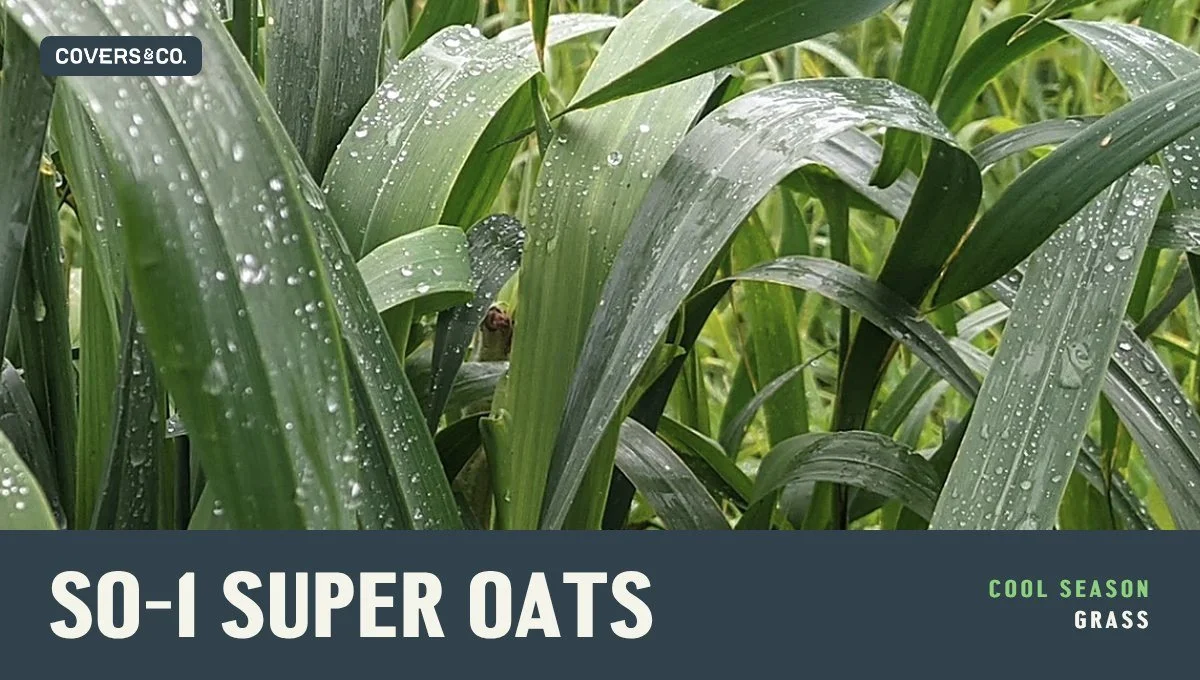
SO-1 Super Oats (16.7%)
Plant Type: Cool Season Grass
Seed Quality: Certified #1 Standard
Variety: CDC SO-1 Super Oats
Why In The Blend? A low-lignin oat developed for cattle feed in 2006 by the Crop Development Center at the University of Saskatchewan and released to Super Oats Canada Ltd. These oats features a high-oil, more digestible groat that provides greater energy density for livestock compared to other oat varieties.
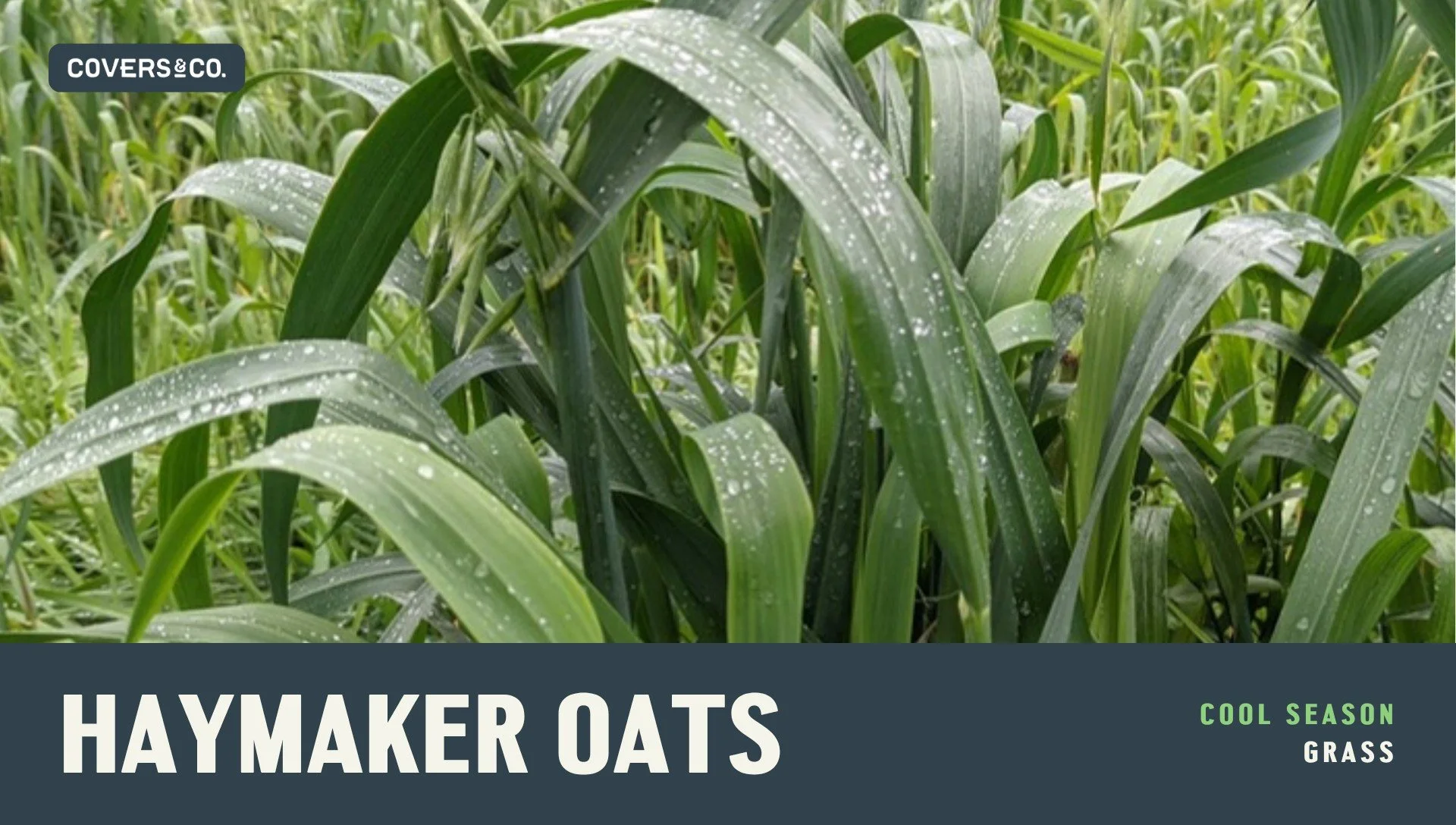
Haymaker Oats (16.7%)
Plant Type: Cool Season Grass
Seed Quality: Certified #1 Standard
Variety: Haymaker
Why In The Blend? Haymaker Oats are a great nutrient scavenger due to their dense fibrous root system. One of the most mycorrhizal-dependent cereals. Large leaf surface gives forage oats the upper hand over regular oats when maximizing sunlight capture. (Photosynthesis)
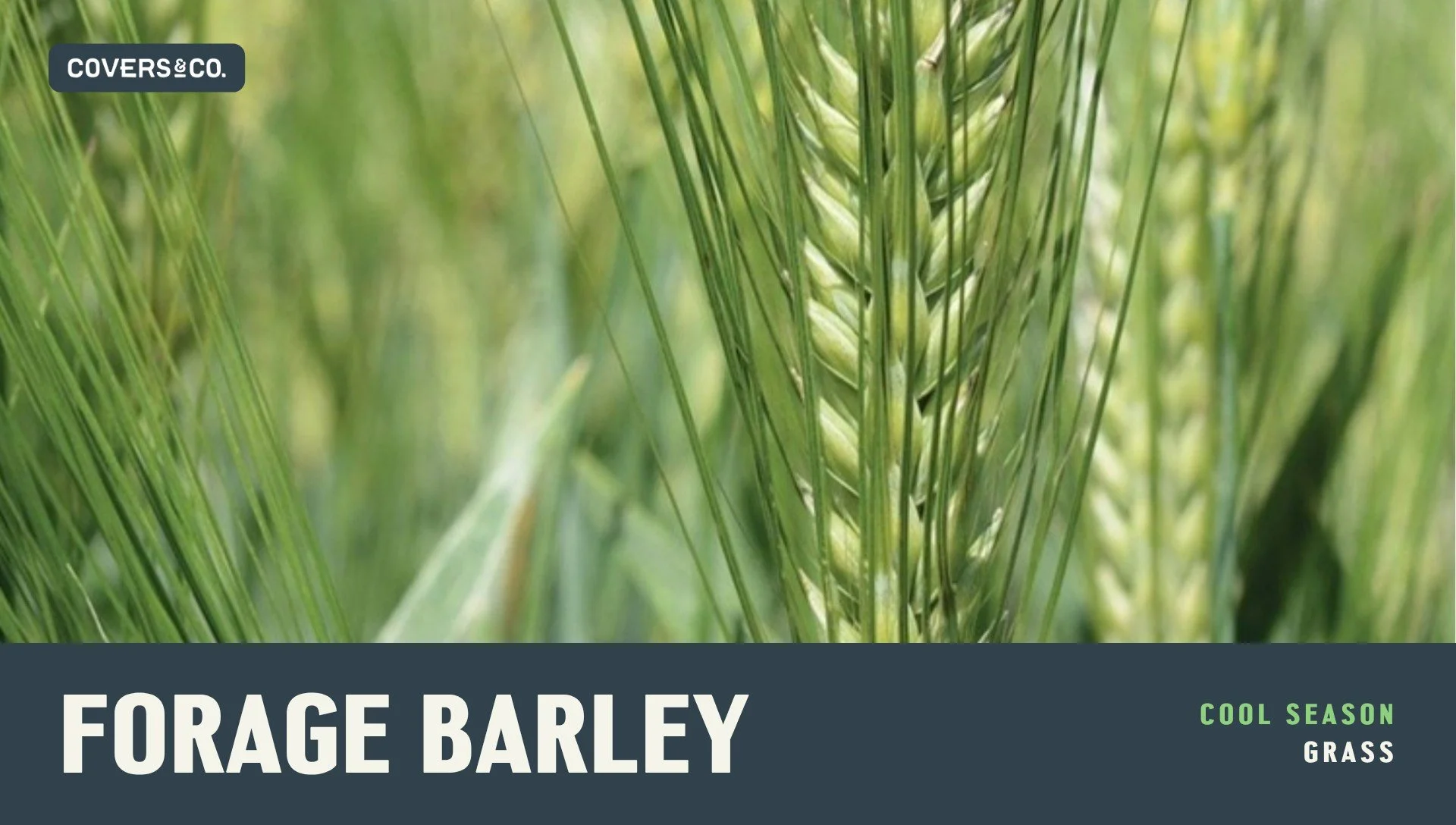
Forage Barley (14.2%)
Plant Type: Cool Season Grass
Seed Quality: Certified #1 Standard
Variety: Conlon
Why In The Blend: Forage Barley adds a cool-season cereal for increased diversity above and below the canopy.
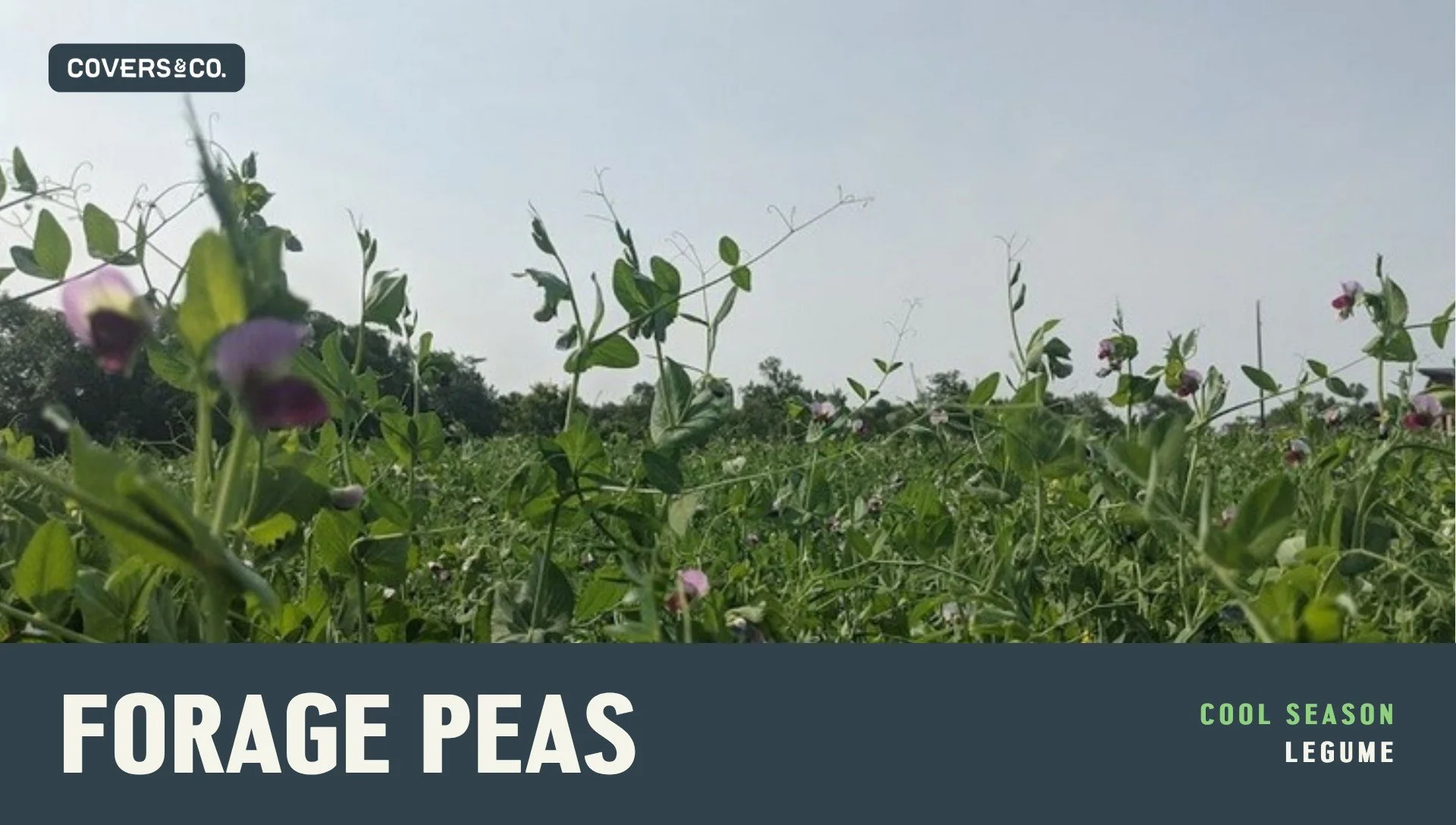
Forage Peas (25%)
Plant Type: Cool Season Legume
Seed Quality: Common #1 Standard
Variety: 40-10
Why In The Blend? Forage pea varieties focus on smaller seed & increased biomass rather than grain yield. Rapid spring growth. The “leaky root” characteristic allows this plant to share nitrogen with other plant species.
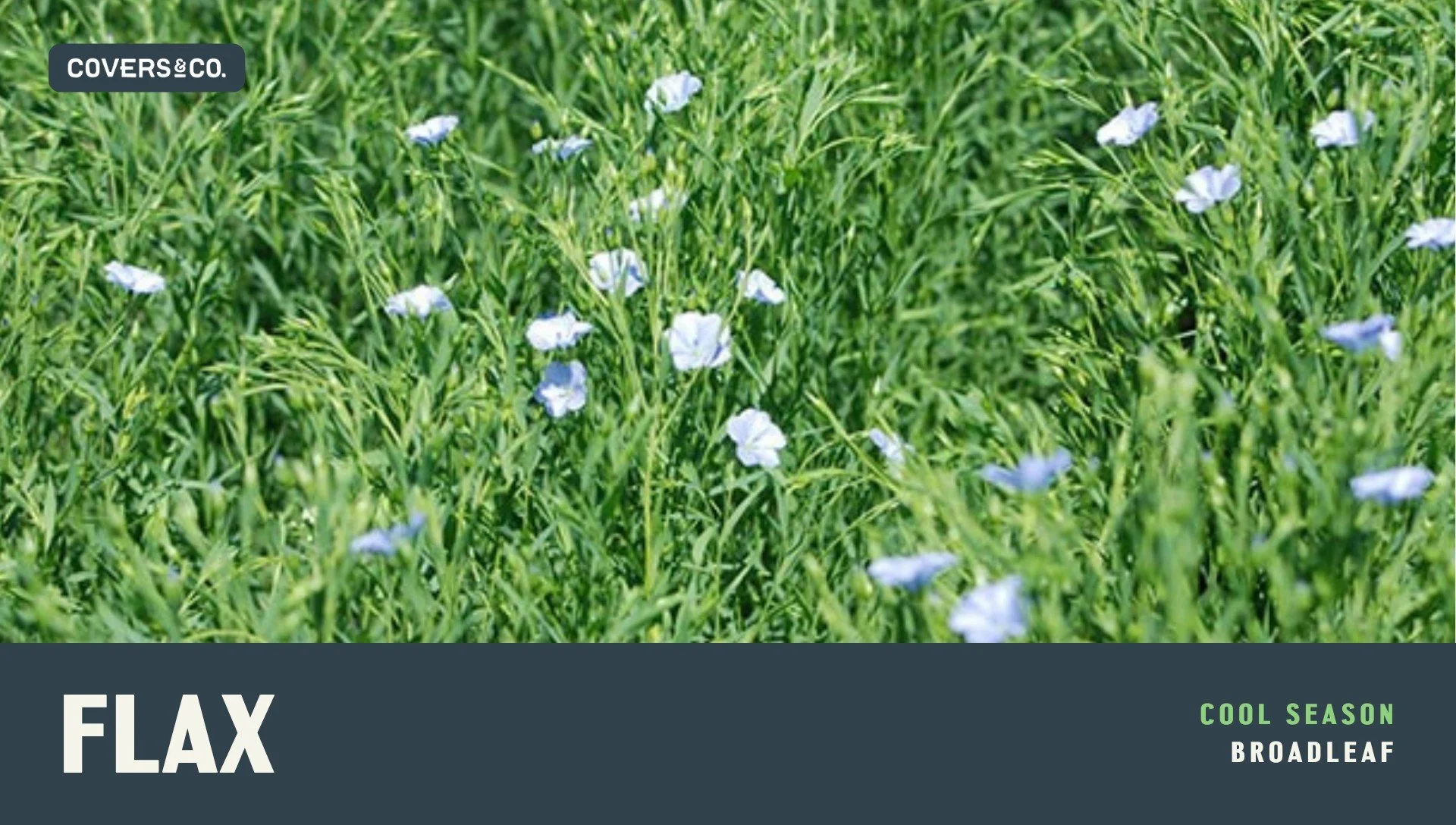
Flax (1.7%)
Plant Type: Cool Season Broadleaf (Linum)
Seed Quality: Common #1 Standard
Why In The Blend? Flax is the highest mycorrhizal fungi-dependent plant. Having a small percentage in the blend helps promote the Arbuscular Mycorrhizal Fungi network. (The network that allows all plant species in the blend to share minerals & water)
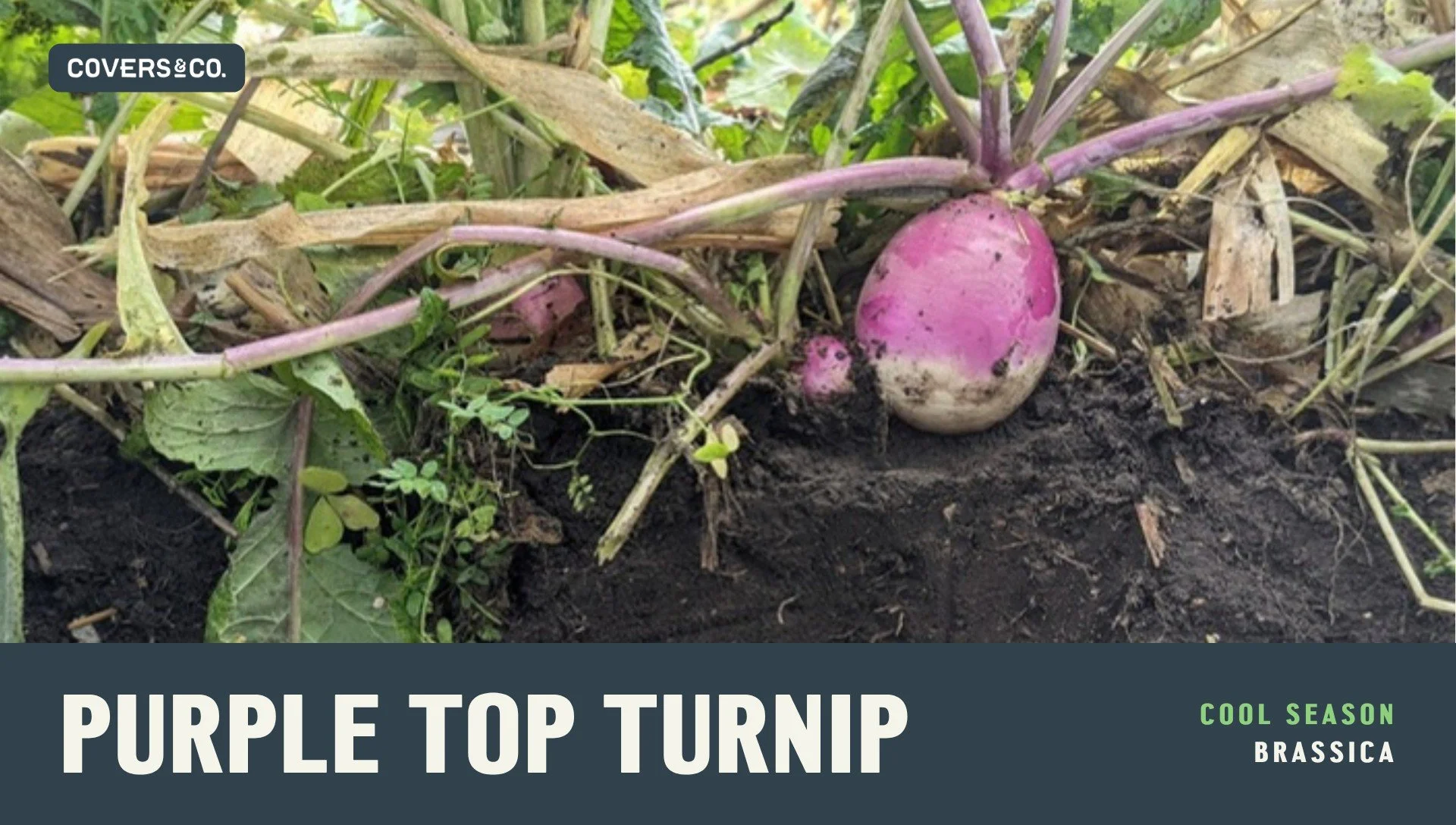
Purple Top Turnip (0.8%)
Plant Type: Cool Season Broadleaf (Brassica)
Seed Quality: Common #1 Standard
Comments: Highly nutritious brassica (digestibility & protein). Tuber scavenges nitrogen and other nutrients for slow release decomposition the following year.
Multi-Leaf Alfalfa (4.2%)
Plant Type: Cool Season Perennial Legume
Mycorrhizal Dependent: Yes
Why In The Blend? High relative feed value with increased leaf growth. (more leaves)
Trifoliate Alfalfa (4.2%)
Plant Type: Cool Season Perennial Legume
Mycorrhizal Dependent: Yes
Why In The Blend? Less leaves than multi-leaf but in a broader form. High field value.
Creeping-Root Alfalfa (4.2%)
Plant Type: Cool Season Perennial Legume
Mycorrhizal Dependent: Yes
Why In The Blend? Ability to withstand pressure from grasses due to its creeping root characteristic. Provides better ground cover for the stand > tap rooted alfalfa.
Tall Fescue (3.8%)
Plant Type: Cool Season Perennial Grass
Mycorrhizal Dependent: Yes
Why In The Blend? Great stockpiling ability, high tonnage potential. Deep rooting grass.
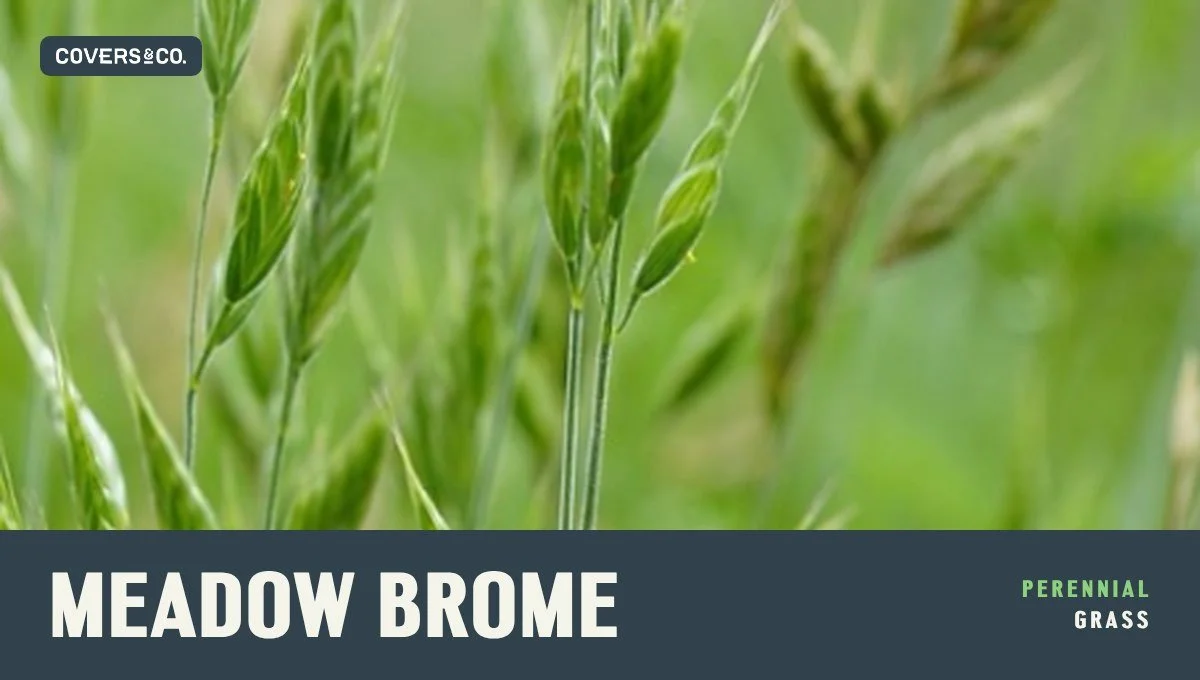
Meadow Brome (2.5%)
Plant Type: Cool Season Perennial Grass
Mycorrhizal Dependent: Yes
Why In The Blend? Fast growing in spring. Greater frost resistance than Smooth Brome. Commonly used in blends across Western Canada.
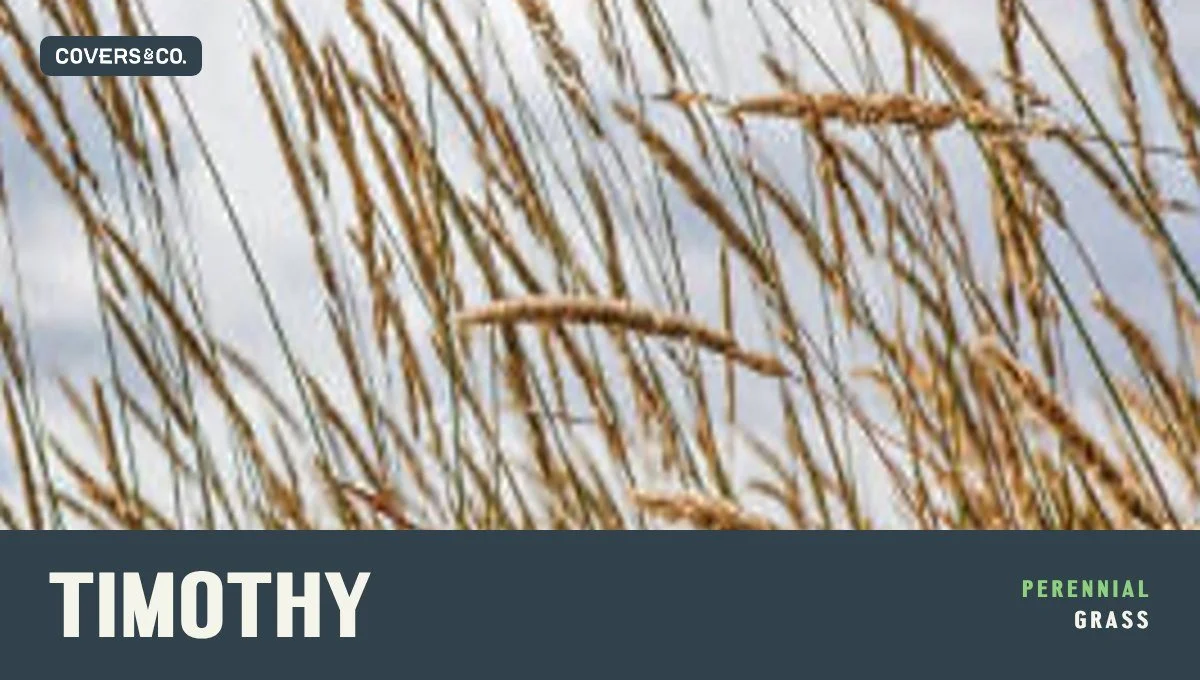
Timothy (2.5%)
Plant Type: Cool Season Perennial Grass
Mycorrhizal Dependent: Yes
Why In The Blend? Abundant leaf growth ability in mid-summer. Mixes well with alfalfa in a stand.
Orchard Grass (2.5%)
Plant Type: Cool Season Perennial Grass
Mycorrhizal Dependent: Yes
Why In The Blend? Vigorous growth with high biomass potential. Dense root system. Does well in cool environments.
Birdsfoot Trefoil (1.3%)
Plant Type: Cool Season Perennial Legume
Mycorrhizal Dependent: Yes
Why In The Blend? Non-bloat legume. High adaptability to its environment. Stays vegetative longer (indeterminate plant species)